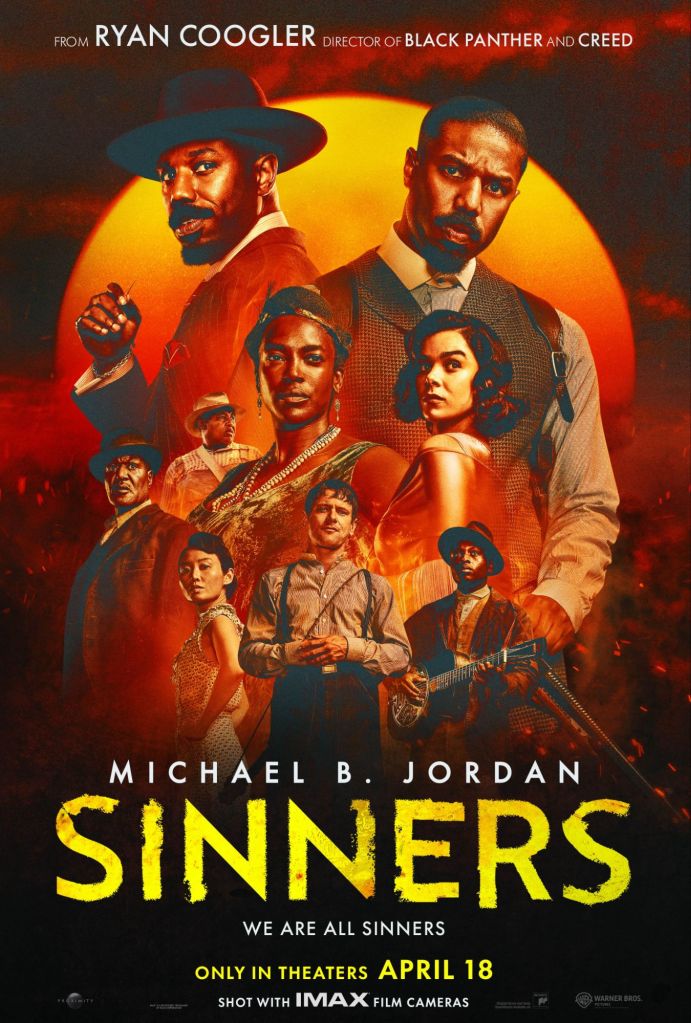
Over the past week, I saw videos on YouTube mentioning this movie. I’m not sure if I’ll include all of my full sarcasm and snark in this post, because I really want to show respect for this movie.
I went into Sinners intrigued by the setting alone. Vampires in the Deep South? Sold. But I was not prepared for how intentional this movie is, how much it understands horror not just as fear, but as pressure, consent, grief, and temptation.
This isn’t a romantic vampire story. It’s not interested in making monsters seductive or safe. These vampires are predators, organizers, recruiters. They are terrifying because they don’t rush. They wait.
Music as Invitation.
At the heart of the film is music, not as background, but as power.
Sammy’s talent isn’t just skill. It’s resonance. His music pulls the past into the present, and that immediately reframes creativity as something dangerous. Art becomes a signal. A beacon. Something that can attract not only people, but entities.
That idea hit hard for me. Creativity in this film isn’t morally neutral. It opens doors. And once something hears you, you don’t get to decide who’s listening.
Vampirism as Cult Horror.
What makes Sinners so unsettling is that vampirism functions like a cult, not a curse.
These vampires require invitation, operate through hierarchy, absorb memory, language, and identity, and move as a collective
Once you see that, everything clicks. The singing. The chanting. The calmness. The way they don’t attack until someone gives permission. This isn’t chaos. It’s organization.
Evil doesn’t kick the door down. It waits for you to open it. Consent, Faith, and Resistance.
The movie is deeply interested in consent, who gives it, who withholds it, and what it costs.
Faith becomes a counterweight to temptation, not as spectacle, but as grounding. One of the most powerful moments in the film is quiet: prayer, spoken in fear, not confidence. It isn’t used as a weapon. It’s used as an anchor.
Music summons. Prayer refuses.
That contrast is where the movie’s spine really is.
Grief as the Sharpest Horror.
There is a reveal late in the film involving loss (specifically the loss of a child) that completely reframes earlier scenes. It’s not flashy. It’s not explained. It simply lands.
For me, that moment broke something open. I’ve lost a child too, and the way the film connects grief to vulnerability (to the longing to see loved ones again) felt painfully honest. This isn’t horror for shock. It’s horror rooted in love that can’t be fixed.
That’s the kind of horror that stays.
Why the Humor Works. Yes, there are laugh-out-loud moments. And they work because they’re earned.
The film understands a crucial craft truth: humor doesn’t weaken horror. It sharpens it. Laughter drops your guard just long enough for the next blow to hit harder. The pacing knows exactly when to let you breathe and when to take that breath away.
The Ending (Without Ruining It)
The ending doesn’t give you a neat bow. It gives you survival, scars, and continuation.
What mattered wasn’t who “won,” but what endured. Music. Memory. Choice.
An ending scene wrecked me so hard that I cried, not because it was sentimental, but because it was restrained.
Final Thoughts: Sinners is horror that trusts its audience. It doesn’t over explain. It doesn’t soften its monsters. It understands folklore, culture, faith, and fear as living things, not props.
These vampires are scary because they feel plausible. Because they organize. Because they wait for permission.
And because sometimes, the most dangerous thing you can do is sing.
My rating?
Distilled Spirits, Habanero moments, Check the Locks, I Put My Edamame Down for This, Actual Laugh moments, I Need a Hug, Five Guys Fries.
Highly recommend. Rated R, watch responsibly.
Thanks for the read.
Signing off for now,
SnS 🌹💀📜🥤
 Snarks & Scrolls Blog
Leave a comment